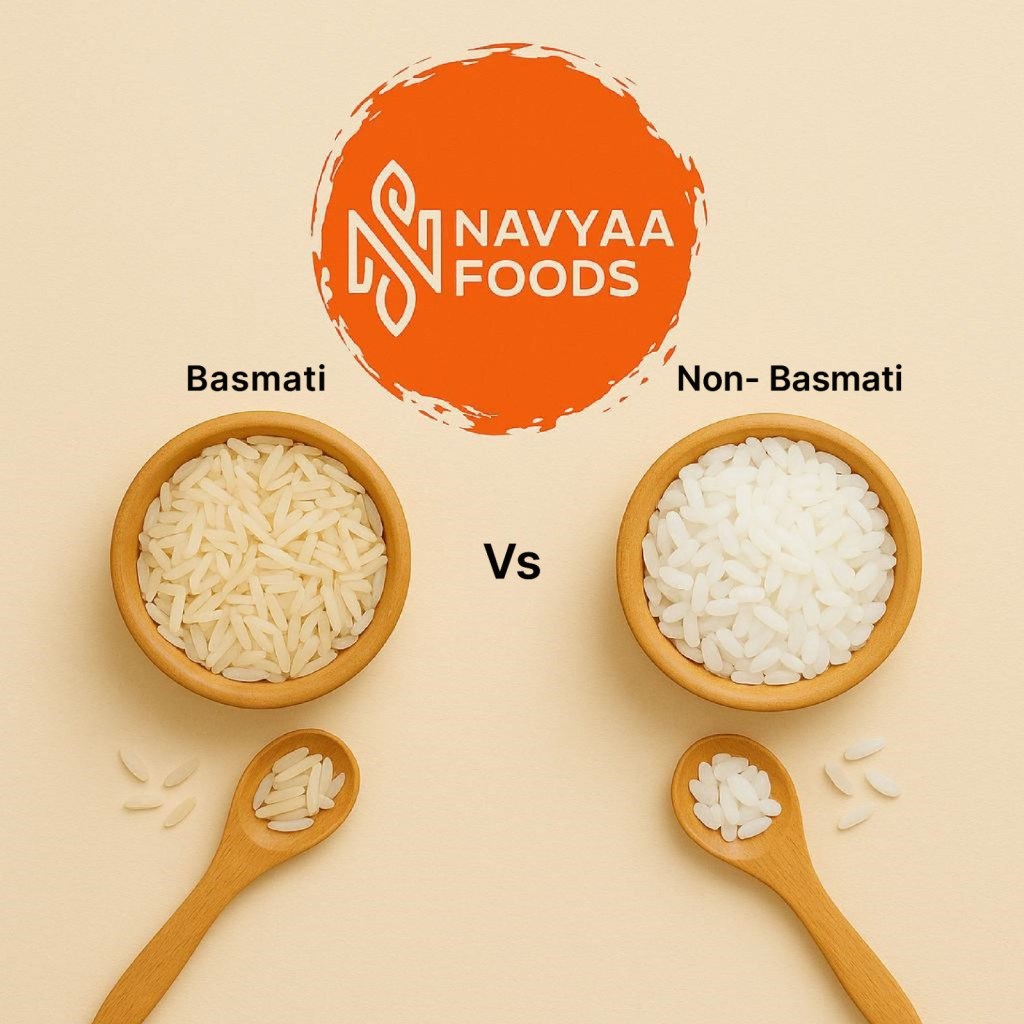
When it comes to rice, the world enjoys a vast variety, but few debates are as common as Basmati vs Non-Basmati. Whether you’re a culinary expert, a health-conscious consumer, or a global importer, understanding the differences between these two broad categories is key to making informed choices. At Navyaa Foods, we specialize in premium rice exports and are here to help you break down the real differences.
- Grain Length & Appearance
• Basmati Rice: Known for its extra-long, slender grains, Basmati elongates further when cooked. It has a distinctive pointed tip and non-sticky texture.
• Non-Basmati Rice: This category includes a wide range of grain lengths—short, medium, or long. Many non-Basmati varieties become soft and sticky when cooked, ideal for certain regional dishes.
- Aroma & Flavor
• Basmati: Often called the “queen of fragrant rice,” Basmati has a natural, nutty aroma due to a compound called 2-acetyl-1-pyrroline. The flavor is delicate and pairs beautifully with rich gravies and curries.
• Non-Basmati: Typically neutral or mildly earthy in aroma, non-Basmati varieties absorb the flavors of the ingredients they’re cooked with, making them perfect for dishes like risotto, paella, or porridge.
- Cooking Characteristics
• Basmati: Cooks to a fluffy, separate-grain texture, ideal for biryanis, pilafs, and festive dishes.
• Non-Basmati: Varies widely—some become sticky or creamy, making them great for comfort foods like khichdi, sushi, or desserts.
- Geographic Origin
• Basmati: Grown predominantly in the Indian subcontinent, especially in the foothills of the Himalayas. India is the largest producer and exporter of Basmati rice, and Navyaa Foods is proud to be part of this legacy.
• Non-Basmati: Grown worldwide, including India, Thailand, Vietnam, the U.S., and other countries. Non-Basmati rice includes varieties like Sona Masoori, Ponni, IR64, and many others.
- Nutritional Profile
• Both types are rich in carbohydrates and a good source of energy.
• Basmati has a lower glycemic index than many non-Basmati varieties, making it suitable for people monitoring their blood sugar.
• Non-Basmati varieties vary in fiber, starch content, and nutritional benefits depending on the type.
- Pricing & Market Demand
• Basmati: A premium product with higher export value, prized for its aroma, age, and grain quality.
• Non-Basmati: More cost-effective, widely used in bulk catering, households, and in regions with specific traditional preferences.
⸻
Which One Should You Choose?
It depends on the dish you’re preparing and the taste profile you’re seeking. For fragrant, celebratory meals, Basmati is the clear choice. For daily staples, traditional dishes, or cost-efficient bulk use, non-Basmati fits the bill perfectly.
⸻
Why Choose Navyaa Foods?
At Navyaa Foods, we bring you premium-grade Basmati and non-Basmati rice sourced directly from trusted farmers. With strict quality checks, global certifications, and customizable packaging options, we ensure your rice needs are met with purity, consistency, and excellence.
Looking to import high-quality rice? Let’s talk
 NAVYAA FOODS
Leave a comment